
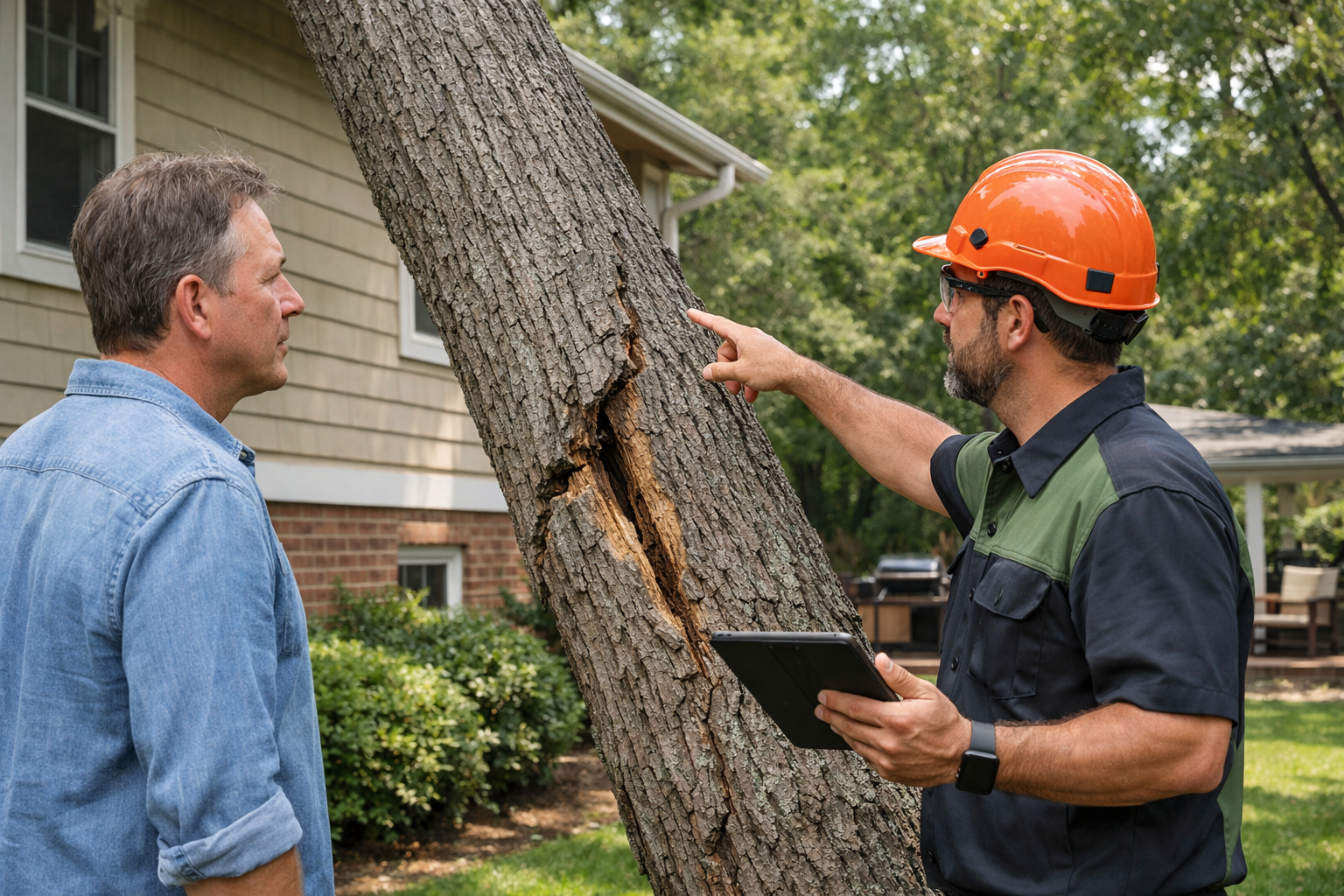
How to handle hazardous trees near your Richmond home is a concern many homeowners face after storms, seasonal changes, or years of natural tree growth.
Trees that once seemed stable can slowly become a safety risk, especially in older neighborhoods or areas exposed to strong winds and heavy rain.
Homeowners often first notice the issue when scheduling services like Stump Removal in Ashland, VA or when nearby trees show visible damage.
The problem is that hazardous trees are not always obvious. A tree can appear healthy while hiding structural weaknesses that increase the risk of falling.
Ignoring these warning signs can lead to property damage, personal injury, or disputes with neighbors. Understanding how to handle hazardous trees near your Richmond home allows you to take action before a situation becomes an emergency.
This guide explains what makes a tree hazardous, how to identify risks, local regulations to follow, and how professional services handle dangerous tree removal safely.
What Is Considered a Hazardous Tree on Residential Properties?
A hazardous tree is one that poses a threat to people, structures, or utilities. Residential tree safety assessments focus on both visible damage and hidden structural issues.
Trees are commonly considered hazardous when they show:
- Severe trunk cracks or splits
- Significant leaning toward a home or driveway
- Large dead or hanging branches
- Root damage or soil lifting near the base
A dangerous tree near house structures does not always need to be dead to be risky. Even living trees can become unstable over time.
Understanding these conditions helps homeowners decide how to handle hazardous trees near your Richmond home responsibly.
Common Signs of Dangerous Trees Around Richmond Homes
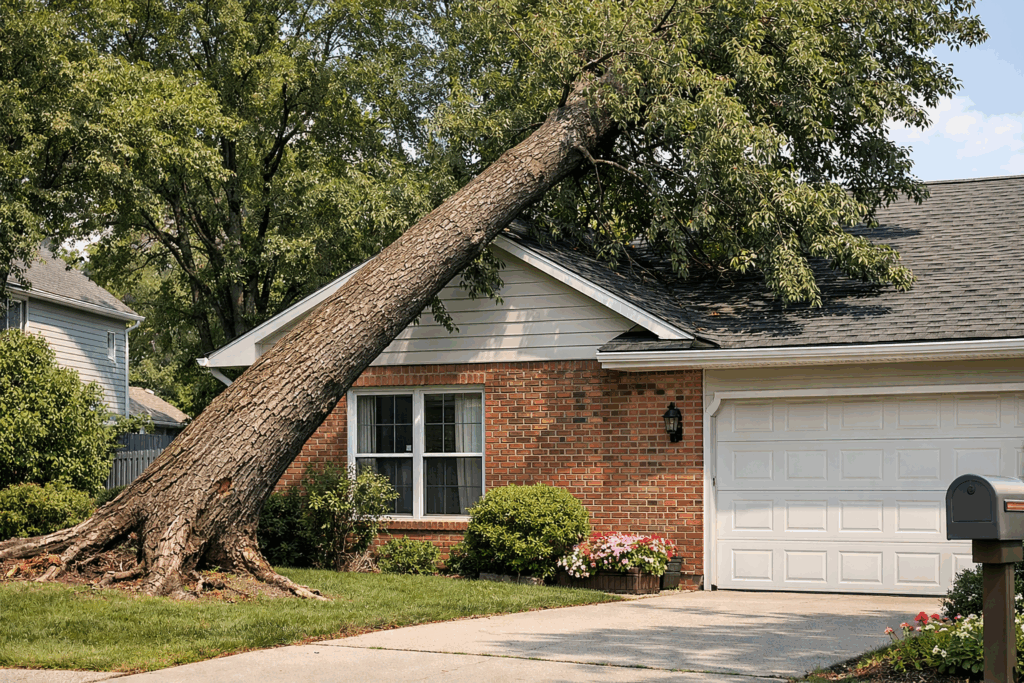
Early detection is key when dealing with hazardous trees. Many warning signs develop gradually and are easy to miss without regular inspection.
Common signs include:
- Dead or brittle branches falling frequently
- Fungal growth on the trunk or roots
- Hollow sounding wood when tapped
- Sudden changes in leaf color or density
Storm-damaged trees are especially common in Richmond after high winds or heavy rain. These trees may look intact but suffer internal damage that increases falling tree risk.
Recognizing these signs helps homeowners act before damage occurs.
Why Hazardous Trees Are a Serious Risk in Richmond’s Climate
Richmond’s climate creates unique challenges for tree stability. Seasonal storms, heavy rainfall, and occasional high winds increase the likelihood of tree failure.
Environmental factors that increase risk include:
- Saturated soil reducing root stability
- Rapid temperature changes weakening wood structure
- Storm debris causing branch fractures
Hazardous tree removal becomes more urgent during storm season when weakened trees are more likely to fail.
Understanding how Richmond’s climate affects trees is essential when learning how to handle hazardous trees near your Richmond home.
Local Tree Removal Laws and Permits in Richmond, Virginia
Local regulations play an important role in hazardous tree removal. While emergency situations may allow expedited action, permits are often required for standard removals.
Homeowners should be aware that:
- Some trees require approval before removal
- Protected or large trees may need permits
- Documentation may be required after emergency removal
Local tree removal laws exist to balance safety with environmental protection. Following regulations helps avoid fines or delays while addressing hazardous conditions.
How Professional Arborists Handle Hazardous Tree Removal Safely
Professional arborists use specialized techniques to manage hazardous tree removal without causing additional damage. Safety planning is a critical first step.
Professional removal typically includes:
- Site assessment and risk evaluation
- Controlled removal of limbs and trunk sections
- Use of safety rigging and equipment
- Protection of nearby structures and utilities
Residential tree safety depends on proper planning and execution. Attempting removal without professional help increases the risk of injury or property damage.
Understanding how professionals work helps homeowners feel confident when addressing dangerous trees.
Emergency Tree Removal Services Available in Richmond, VA
Emergency tree service options are available when immediate action is required. Situations that often require emergency removal include:
- Trees fallen on homes or vehicles
- Trees blocking driveways or access points
- Trees threatening power lines
Emergency tree removal Richmond VA services prioritize safety and rapid response. In these cases, removal may proceed before full permitting, followed by documentation if required.
Knowing when to call emergency services is a key part of how to handle hazardous trees near your Richmond home.
Cost of Hazardous Tree Removal Near Your Richmond Home
The cost of hazardous tree removal varies based on several factors. Emergency services typically cost more due to urgency and increased risk.
Cost factors include:
- Tree size and location
- Level of structural damage
- Accessibility for equipment
- Emergency response needs
While costs can be higher, delaying removal often leads to greater expenses from property damage. Addressing hazards early helps manage long term costs.
Choosing a Trusted Tree Service Company in Richmond, US
Selecting reliable local tree removal experts ensures hazardous trees are handled correctly. Experience, safety practices, and local knowledge are essential.
Homeowners should look for:
- Licensed and insured providers
- Experience with hazardous tree removal
- Knowledge of Richmond regulations
- Clear communication and planning
Timberbrute provides professional solutions for hazardous tree removal that prioritize safety and compliance. Homeowners seeking assistance can connect through the Contact Us page for expert guidance.
Conclusion
How to handle hazardous trees near your Richmond home requires awareness, timely action, and professional support. Hazardous trees can develop slowly, but the risks they pose increase rapidly once structural damage begins.
By recognizing warning signs, understanding local regulations, and working with experienced professionals, homeowners can protect their property and family. Addressing hazardous trees early ensures safety, peace of mind, and long term property protection.
Frequently Asked Questions
How do I know if a tree near my Richmond home is hazardous?
Signs include dead branches, leaning, trunk cracks, root damage, and frequent limb drop.
Do I need a permit to remove a dangerous tree in Richmond, VA?
Permits may be required depending on tree size, location, and protection status, though emergencies may allow faster action.
Who is responsible if a hazardous tree falls on a neighbor’s property?
Responsibility often depends on prior knowledge of the hazard and property boundaries.
Can storm-damaged trees be removed immediately in Richmond?
Yes, emergency removal is often allowed to prevent further damage or safety risks.
How long does hazardous tree removal usually take?
Most removals take several hours to a full day depending on complexity and site conditions.