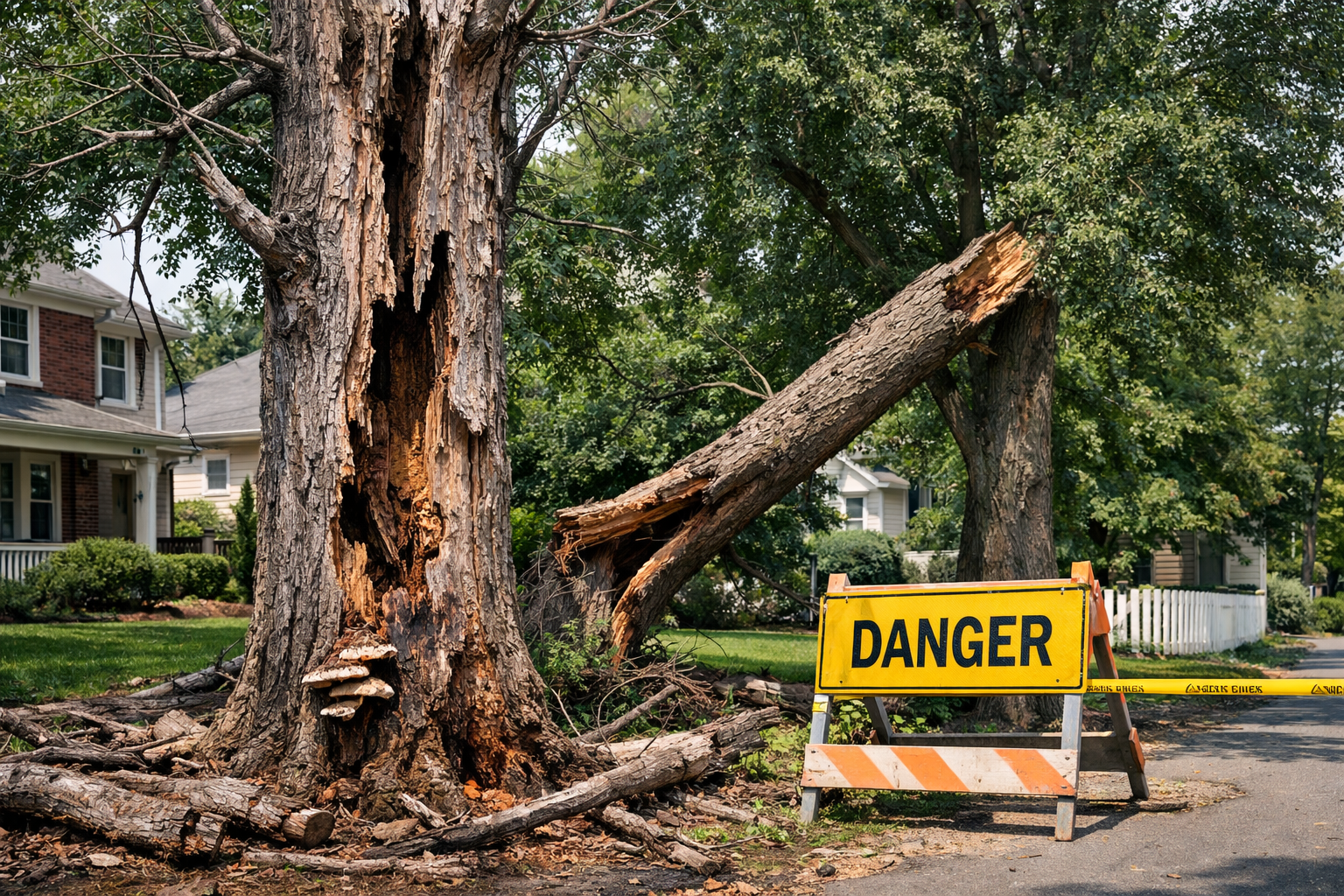
How to know if your Richmond tree is dead or dangerous is a question many homeowners face when trees begin to look unhealthy or unstable. Trees can decline slowly, and the signs are not always obvious at first.
Homeowners often notice a problem only after branches fall, leaves fail to grow, or nearby structures are put at risk. Situations like these sometimes lead residents to explore services such as Stump Removal in Mechanicsville, VA after a tree becomes unsafe.
The problem is that delaying action can increase safety risks and property damage. A dead or dangerous tree near a home can fall without warning, especially during storms or high winds.
Learning how to know if your Richmond tree is dead or dangerous allows you to act early, protect your property, and avoid emergency situations.
This guide explains the most common warning signs, local climate factors, diseases, and regulations that Richmond homeowners should understand when evaluating tree safety.
Common Signs Your Tree May Be Dead or Dying in Richmond
Dead tree signs often appear gradually, which makes them easy to overlook. Some symptoms are visible year round, while others show up during specific seasons.
Common indicators include:
- No new leaf growth during spring
- Brittle branches that snap easily
- Peeling or missing bark
- Fungal growth near the base
- Hollow or cracked trunk sections
Dying tree identification requires looking at the overall condition of the tree, not just one symptom. A single dead branch does not always mean the tree is dead, but multiple signs together can indicate serious decline.
Understanding these signs helps homeowners determine how to know if your Richmond tree is dead or dangerous before the situation worsens and can also point to the best time to plan affordable tree services before minor issues turn into costly problems.
How Richmond’s Climate and Weather Impact Tree Health
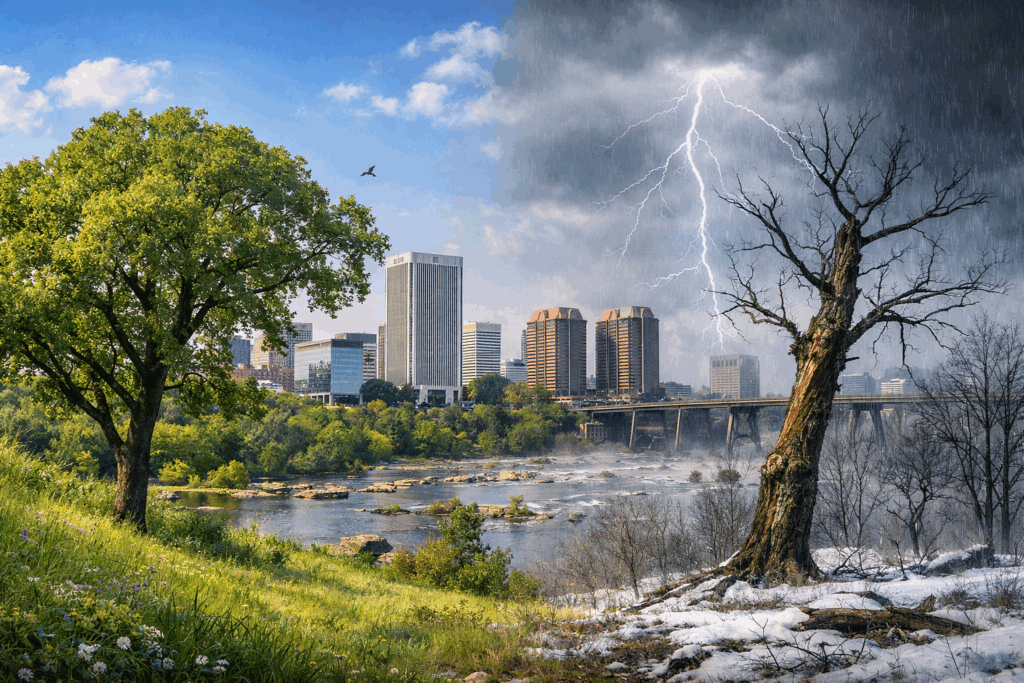
Richmond’s climate plays a major role in tree health. Hot summers, heavy rainfall, and seasonal storms create stress that weakens trees over time.
Climate related factors include:
- Saturated soil reducing root stability
- Heat stress during extended dry periods
- Storm damage weakening branches and trunks
Virginia tree health is closely tied to these environmental conditions. Trees that appear healthy during mild weather may become dangerous after storms.
Richmond tree safety depends on monitoring how trees respond to changing weather patterns.
Understanding local climate impacts helps homeowners recognize when trees are under stress, and it also guides smart follow up decisions like knowing how to remove remaining roots safely after a damaged or dying tree is taken down.
Visible Structural Damage That Makes a Tree Dangerous
Some of the most serious warning signs involve structural damage. These issues often indicate that a tree poses an immediate safety risk.
Structural red flags include:
- Large cracks running through the trunk
- A noticeable lean toward a house or driveway
- Exposed or damaged roots
- Split limbs hanging overhead
A dangerous tree near house structures should never be ignored. Structural damage weakens the tree’s ability to support its own weight, increasing the likelihood of failure.
Knowing how to spot these issues is a key part of how to know if your Richmond tree is dead or dangerous.
Seasonal Warning Signs to Watch for in Central Virginia Trees
Trees behave differently throughout the year, and some warning signs are seasonal. In Central Virginia, certain patterns are especially important to watch.
Seasonal indicators include:
- No leaf growth in spring when nearby trees are full
- Early leaf drop during summer
- Discolored or sparse foliage in fall
- Sudden branch loss during winter storms
Dormant trees can sometimes be mistaken for dead ones, especially in winter. However, repeated seasonal issues often indicate deeper problems.
Tracking changes over time helps distinguish temporary stress from long term decline.
Local Tree Diseases and Pests Common in Richmond, VA
Tree disease symptoms are a common cause of decline in Richmond. Certain diseases and pests are more prevalent due to local climate and tree species.
Common issues include:
- Fungal infections affecting roots and bark
- Insect infestations weakening internal structure
- Leaf diseases reducing photosynthesis
Richmond tree safety can be compromised when diseases spread unnoticed. Once a tree’s internal systems are damaged, recovery becomes difficult or impossible.
Early identification increases the chance of treatment or safe removal.
When a Tree Becomes a Safety Risk for Richmond Homes
A tree becomes a safety risk when its failure could harm people, buildings, or utilities. Even living trees can be dangerous if structural integrity is compromised.
Safety risks increase when:
- Trees are close to homes or power lines
- Roots damage sidewalks or foundations
- Large limbs overhang roofs or play areas
Hazardous tree removal is often recommended once a tree reaches this stage. Understanding when a tree crosses from unhealthy to unsafe is critical for homeowner responsibility.
Learning how to know if your Richmond tree is dead or dangerous helps prevent accidents before they occur.
Richmond Tree Inspection: When to Call a Local Tree Expert
Professional inspection is often the safest way to assess tree health. Tree inspection Richmond VA services evaluate both visible and hidden issues.
You should call a local expert when:
- Structural damage is present
- The tree shows multiple decline symptoms
- Storm damage has occurred
- The tree is close to structures
Local professionals understand Richmond soil, climate, and common tree issues. A proper inspection helps determine whether treatment, monitoring, or removal is necessary.
Tree Removal and Safety Regulations in Richmond, Virginia
Local regulations may affect how dead or dangerous trees are handled. Some removals require permits depending on tree size and location.
Homeowners should be aware that:
- Emergency removals may follow expedited rules
- Protected trees may require approval
- Documentation may be required after removal
Following regulations protects homeowners from fines or disputes. Understanding these rules is part of responsible Richmond tree safety planning.
Conclusion
How to know if your Richmond tree is dead or dangerous starts with awareness and regular observation. Trees often show warning signs long before they fail, but those signs can be easy to miss without guidance.
By understanding local climate impacts, disease symptoms, and structural risks, homeowners can act early and protect their property.
When uncertainty remains, working with Timberbrute for a professional inspection can provide clarity, and reaching out through the Contact Us page helps ensure timely action that prevents emergencies and supports long term safety.
Frequently Asked Questions
How can I tell if my tree is dead or just dormant in Richmond?
Dormant trees may lack leaves temporarily, but dead trees show brittle branches, peeling bark, and no new growth over time.
Are dead trees required to be removed in Richmond, VA?
Dead trees that pose safety risks may need to be removed, especially if they threaten structures or public areas.
What trees are most likely to become dangerous in Virginia?
Trees weakened by disease, pests, or storm damage are most likely to become hazardous.
Can a dying tree recover with proper care?
Some trees can recover if issues are identified early, but severely damaged trees often cannot.
Who is responsible if a dangerous tree falls on my property?
Responsibility typically lies with the property owner, especially if the hazard was known and unaddressed.