
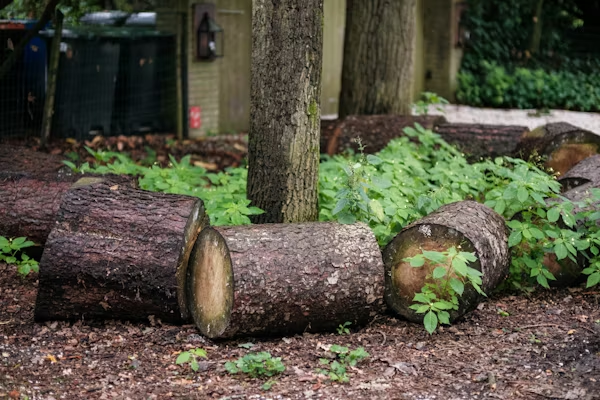
If you have recently had a tree cut down on your Virginia property, you are likely staring at a leftover eyesore and asking yourself, “Stump Grinding vs. Stump Removal: Which Is Better?” Leaving a stump behind isn’t just a matter of aesthetics; it can impact your lawn’s health, attract pests, and create a permanent tripping hazard. At Timberbrute, we understand that homeowners in Virginia want a clear, level yard without spending more than necessary.
Deciding between these two methods depends on your future landscaping goals, your budget, and how much of an impact you want to make on your soil. In this guide, we will break down the difference between stump grinding and removal, the costs involved, and the long-term effects on your property so you can make the most informed choice for your home.
Understanding the Key Differences Between Grinding and Removal
The first step in choosing a path is understanding what tree stump removal is versus the more common grinding process. Removal is a comprehensive process where the entire stump, including the main root ball, is excavated from the earth. It is a “complete stump extraction guide” in action, often requiring heavy machinery like backhoes to pull the bulk of the tree out of the ground.
On the other hand, stump grinding involves using specialized arborist equipment to chew the wood into small chips. The machine grinds the stump down to several inches below the soil line. This leaves the deep roots to decay naturally while providing a flat surface for landscape improvement. Understanding the pros and cons of stump grinding is essential, as it is often the best option for stump elimination for residential lawns where minimal soil disruption is preferred.
Cost Comparison: Which Option Fits Your Budget?
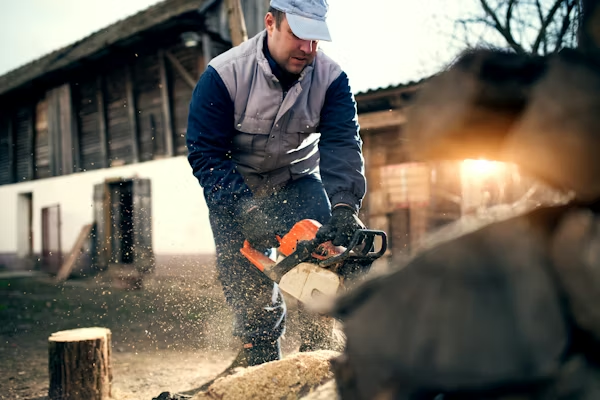
When comparing stump removal vs. grinding cost, grinding is almost always the winner for those seeking affordable stump solutions. Grinding requires less labor and smaller equipment, making it the go-to for standard yard safety solutions. In Virginia, grinding a single stump can range from $150 to $400 depending on its diameter.
Full tree stump extraction is significantly more expensive. Because it involves digging a massive hole and hauling away a heavy, dirt-clogged root ball, the labor and disposal fees can easily double or triple the price of grinding. If you are trying to determine which stump method is better for your wallet, grinding offers the highest ROI by quickly restoring your curb appeal without the high price tag of excavation.
Impact on Your Lawn and Landscaping Plans
Your future plans for the yard should dictate whether you grind or remove tree stump remains. Grinding leaves the deep root system removal for nature to handle over several years. This means you can easily cover the area with topsoil and grass seed. However, you might encounter root problems after stump removal if you try to plant a new large tree in the exact same spot too soon.
Full removal allows for an immediate lawn restoration process. Since the root ball is gone, you have a blank canvas. The downside is the “aftermath”—a large hole that must be filled and graded. In the clay-heavy soils found in many parts of Virginia, this can lead to settling over time, requiring additional soil to keep the area level.
Time, Equipment, and Labor Explained
The time, equipment, and labor required for these tasks vary greatly. A stump grinding service typically uses a compact, high-speed machine that can fit through most backyard gates. A single stump can often be ground down in 30 to 60 minutes. It is a clean, efficient process that produces mulch you can actually use in your garden beds.
In contrast, tree care professionals performing a full extraction often need a mini-excavator. This increases the risk of lawn ruts and requires more space for maneuvering. The labor involves not just the extraction but also the significant task of backfilling the hole and compacting the soil. For most Virginia residential neighborhoods, the efficiency of grinding makes it the preferred landscape improvement choice.
When Full Extraction Makes More Sense
While grinding is popular, there are specific scenarios where full tree stump extraction is the superior choice. If you are planning to put in a new foundation, a swimming pool, or an underground utility line, those old roots cannot stay in the ground.
Complete extraction is also recommended if the tree was heavily infested with termites or a specific fungal disease that could spread to other plants through the soil. By choosing full removal, you ensure that the entire “host” for these pests is gone. It is a more aggressive yard safety solution, but it is sometimes the only way to ensure a truly “clean” site for major construction.
How to Decide the Right Solution for Your Property
To decide between stump grinding vs. stump removal, ask yourself these three questions:
- What is the end goal? If you just want grass, grind it. If you’re building a shed or a pool, remove it.
- What is the budget? If cost is a major factor, grinding is the clear winner.
- How much mess can you tolerate? Grinding creates a pile of mulch; removal creates a crater.
In Virginia, most homeowners find that grinding provides the best balance of price and results. Timberbrute can help you evaluate the diameter, tree species, and soil conditions to provide an accurate estimate. Our tree care professionals are equipped to handle either path, ensuring your property is left safe and beautiful.
Frequent Ask Questions
1. Is stump grinding cheaper than full removal?
Yes, stump grinding is significantly more affordable. It requires less heavy machinery, fewer man-hours, and doesn’t involve the high cost of hauling away and disposing of a massive root ball.
2. Does stump removal take longer than grinding?
Absolutely. While a stump can be ground in under an hour, full extraction involves deep digging, root cutting, hauling the debris, and backfilling the hole with new soil, which can take several hours or even a full day.
3. Will roots remain after stump grinding?
The deep structural roots remain underground after grinding. Over the course of 5 to 10 years, these roots will naturally decay and return nutrients to the soil.
4. Which option is better for replanting in the same spot?
Full removal is better if you want to plant another large tree in the exact same spot immediately. If you choose grinding, you should offset your new planting by a few feet to avoid the old root mass.
5. Does grinding completely eliminate pest problems?
Grinding removes the main food source for pests like termites and carpenter ants. While some roots remain, they are much less attractive to pests once the main stump is gone and covered with soil.
Conclusion
Choosing between stump grinding vs. stump removal: Which is better ultimately comes down to your property’s future. For the vast majority of Virginia homeowners, grinding is the most efficient, cost-effective, and least intrusive way to reclaim their yard. It eliminates the eyesore and the hazard while allowing your grass to thrive once again. At Timberbrute, we specialize in providing high-quality, professional stump services tailored to the unique needs of our local communities. Whether you need a quick grind to tidy up your lawn or a full extraction for a new project, our team of experts is here to help.
Ready to get rid of that stump for good? Contact Timberbrute today for a free quote, and let us show you why we are Virginia’s top choice for stump grinding vs. stump Removal: Which Is Better for Your Property!