
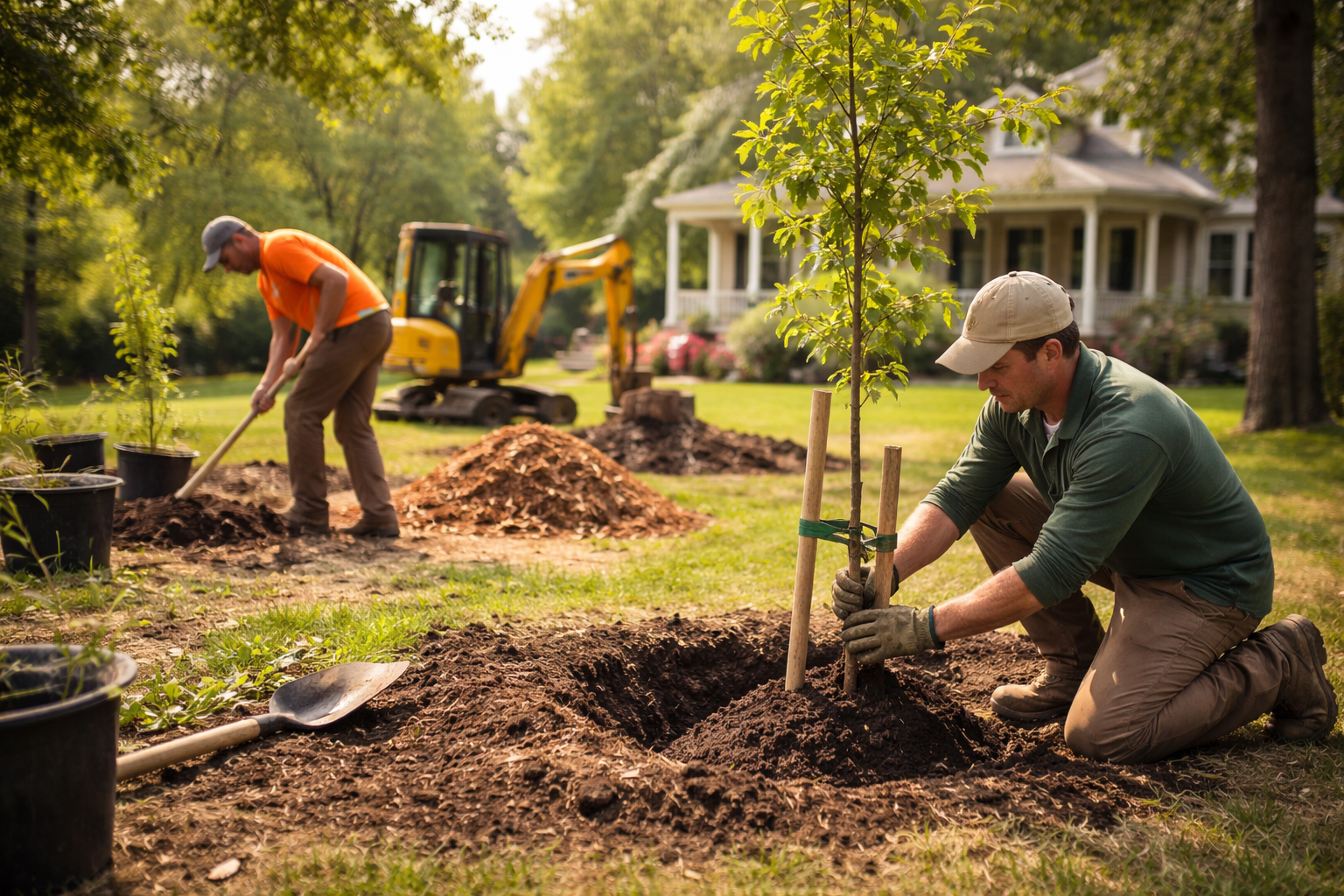
Replanting after tree removal in Richmond is an important step many property owners overlook once a damaged or unsafe tree is taken down. While services like tree removal in Westover Hills, VA often solve immediate safety or space concerns, what happens afterward plays a major role in soil health, property value, and long term landscape stability.
The problem is that removing a tree without a replanting plan can leave properties vulnerable to erosion, drainage issues, and loss of curb appeal. Over time, this can negatively affect both residential and commercial spaces.
Replanting after tree removal in Richmond helps restore balance, supports sustainable landscaping, and keeps neighborhoods green and resilient.
This blog explains why replanting matters, when to do it, which trees work best, and how Richmond property owners can approach tree replacement responsibly.
Before planting new trees or plants, it’s important to focus on repairing your lawn after tree removal so the soil and grass can recover properly.
Why Replanting After Tree Removal Is Important for Richmond Properties
Replanting after tree removal in Richmond is not just about aesthetics. Trees provide structural and environmental benefits that are lost when a mature tree is removed.
Key reasons replanting is important include:
- Restoring shade and temperature control
- Preventing soil erosion and runoff
- Supporting local wildlife habitats
- Maintaining neighborhood character
Tree replanting after removal also supports long term environmental conservation in Richmond. Without replacement planting, properties may experience declining soil quality and reduced visual appeal.
Understanding the importance of replanting after tree removal in Richmond helps property owners make decisions that benefit both their land and the surrounding community.
Best Time to Replant Trees in Richmond, Virginia
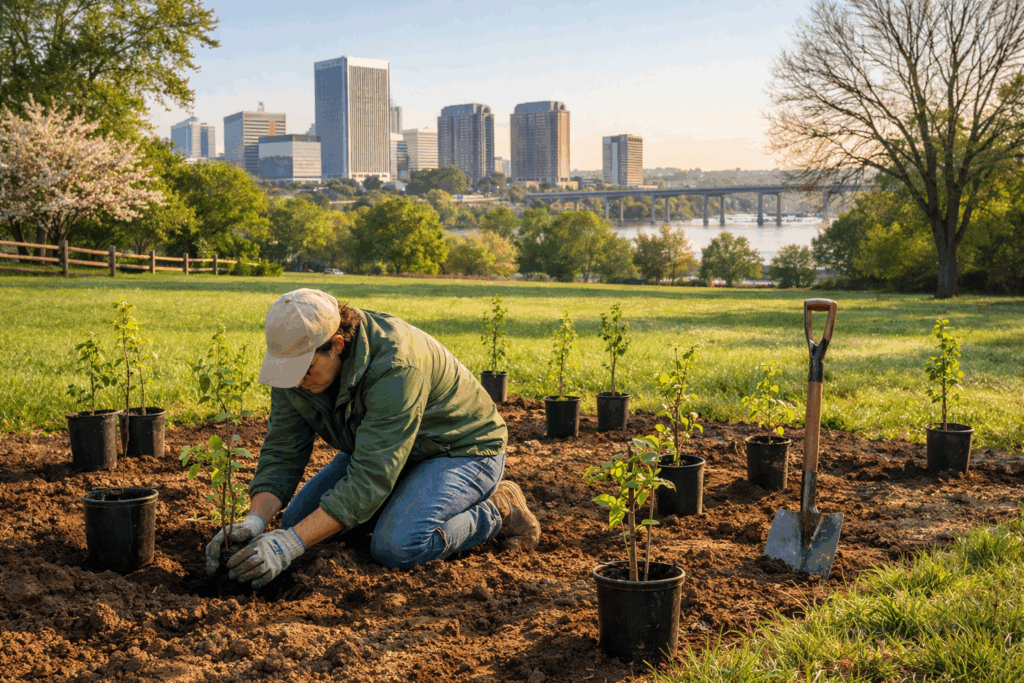
Timing plays a critical role in successful replanting. The best time to replant trees in Richmond, Virginia is typically during cooler seasons when stress on new roots is minimized.
Ideal replanting windows include:
- Early spring before peak heat
- Fall when soil temperatures remain stable
Avoiding extreme summer heat allows newly planted trees to establish roots more effectively. Replanting after tree removal in Richmond during these seasons improves survival rates and long term growth.
Planning ahead ensures that replacement trees adapt well to local climate conditions.
Native Tree Species Recommended for Replanting in Richmond
Choosing native trees in Richmond, Virginia supports healthy ecosystems and reduces maintenance needs. Native species are adapted to local soil, rainfall, and temperature patterns.
Commonly recommended native options include:
- Oak varieties
- Red maple
- Eastern redbud
- American holly
Native trees support pollinators and wildlife while requiring less water and intervention. Replanting after tree removal in Richmond with native species contributes to sustainable landscaping practices and long term environmental health.
Soil Preparation Tips After Tree Removal in Richmond, VA
Soil restoration after tree removal is a critical step that directly impacts replanting success. Removing a tree often leaves compacted soil, leftover roots, or nutrient imbalances.
Effective soil preparation includes:
- Removing remaining root debris
- Loosening compacted soil
- Testing soil nutrient levels
- Adding organic material when needed
Post tree removal landscaping should focus on creating a healthy foundation for new growth. Proper soil preparation increases root development and reduces the risk of future planting failure.
Replanting after tree removal in Richmond is far more successful when soil conditions are addressed first.
Local Richmond Tree Replacement Regulations You Should Know
Tree planting regulations Richmond property owners must follow can vary depending on location, zoning, and previous tree removal circumstances. In some cases, replacement planting may be required after removal.
Local guidelines may involve:
- Replacement tree size requirements
- Approved planting locations
- Species recommendations
- Compliance timelines
Residential tree planting in Richmond may also be influenced by neighborhood associations or city guidelines. Understanding these regulations helps property owners avoid compliance issues.
Replanting after tree removal in Richmond should always align with local requirements to prevent delays or penalties.
How Replanting Improves Property Value in Richmond Neighborhoods
Replanting after tree removal in Richmond can positively impact property value over time. Mature trees are often associated with attractive, well maintained properties.
Benefits to property value include:
- Improved curb appeal
- Enhanced outdoor comfort
- Increased neighborhood desirability
- Long term landscape stability
Sustainable landscaping Richmond, VA homeowners invest in often delivers returns through both enjoyment and resale potential. Replanting demonstrates responsible property stewardship and commitment to community aesthetics.
Before replanting, it’s helpful to consider the land clearing impact on property value and how a well-maintained landscape can improve curb appeal.
Choosing the Right Tree Size for Replanting in Richmond Yards
Tree size selection affects both planting success and maintenance needs. Larger trees offer immediate visual impact but may struggle to establish roots.
Smaller or medium sized trees often:
- Establish faster
- Require less initial care
- Adapt better to soil conditions
Choosing the right size supports healthier long term growth. Replanting after tree removal in Richmond should prioritize tree health over instant results.
Professional guidance helps match tree size with available space and soil conditions.
Hiring a Professional Tree Replanting Service in Richmond, VA
Professional support simplifies the replanting process. A qualified service understands local soil conditions, tree species selection, and planting techniques aligned with standards such as those supported by the International Society of Arboriculture.
Tree replacement services Richmond, VA property owners rely on can assist with:
- Soil preparation
- Tree selection
- Proper planting depth
- Post planting care
Timberbrute offers professional solutions that support responsible replanting after tree removal in Richmond. For guidance or service inquiries, property owners can connect through the Contact Us page.
Conclusion
Replanting after tree removal in Richmond is a vital step in maintaining healthy landscapes and sustainable neighborhoods. It restores environmental balance, protects soil integrity, and enhances long term property value.
By choosing the right timing, native species, and professional support, Richmond property owners can turn tree removal into an opportunity for renewal. Responsible replanting ensures that Richmond remains green, resilient, and well cared for.
Frequently Asked Questions
How soon should I replant after tree removal in Richmond?
Replanting is typically recommended once the soil has been properly prepared and stabilized, often within a few months.
Do I need a permit to replant a tree in Richmond, VA?
Permits are generally not required for replanting, but replacement requirements may apply in certain cases.
What are the best native trees to plant in Richmond’s climate?
Oak, red maple, eastern redbud, and American holly are commonly recommended native options.
Can I replant a tree in the same spot where one was removed?
In many cases yes, but soil preparation and root removal are essential for success.
How does replanting trees help prevent soil erosion in Richmond?
Tree roots stabilize soil, reduce runoff, and improve water absorption over time.